
Last updated September 10, 2026
Level 1 sweep and inspection to the NFPA 211 annual standard - flue, crown, cap, and flashing checked and photographed
Chimney sweep logs do not sweep chimneys. They loosen some creosote - which then falls where a brush and vacuum still have to collect it.
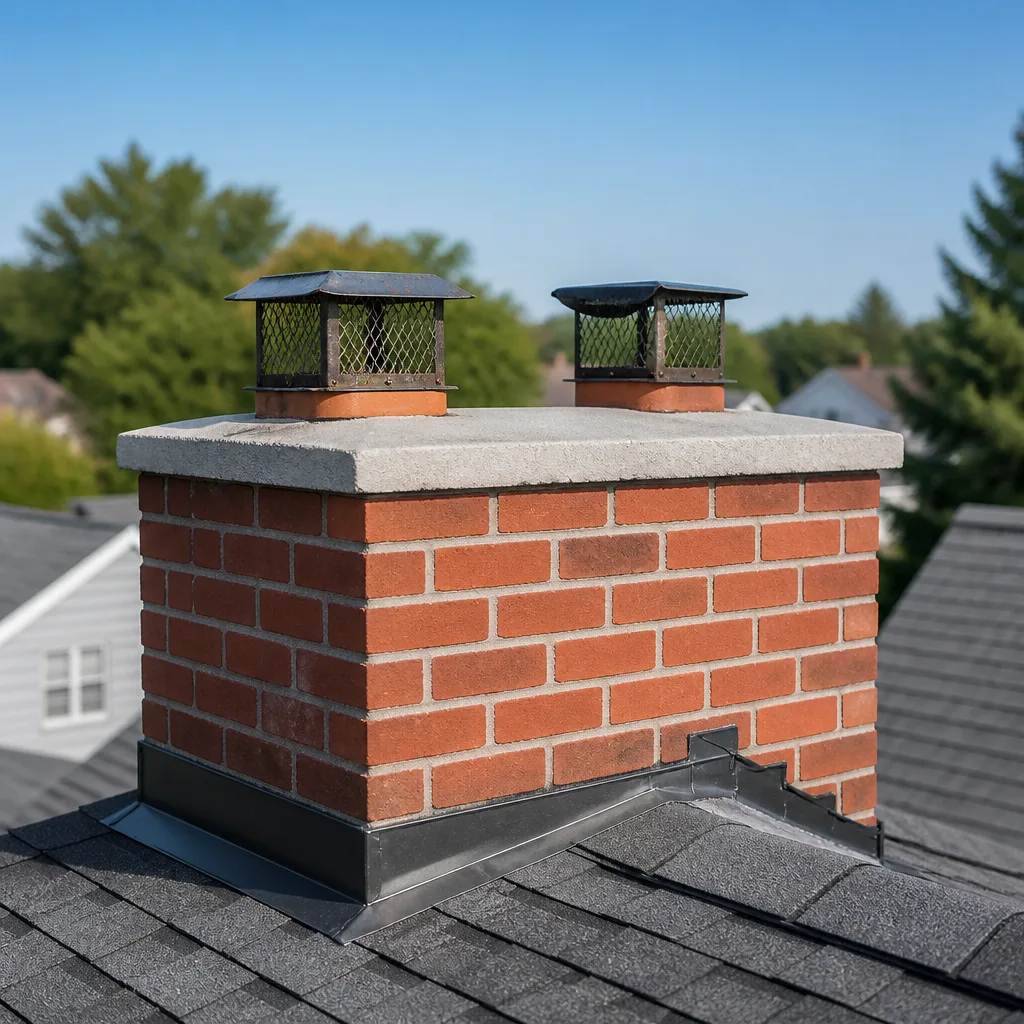
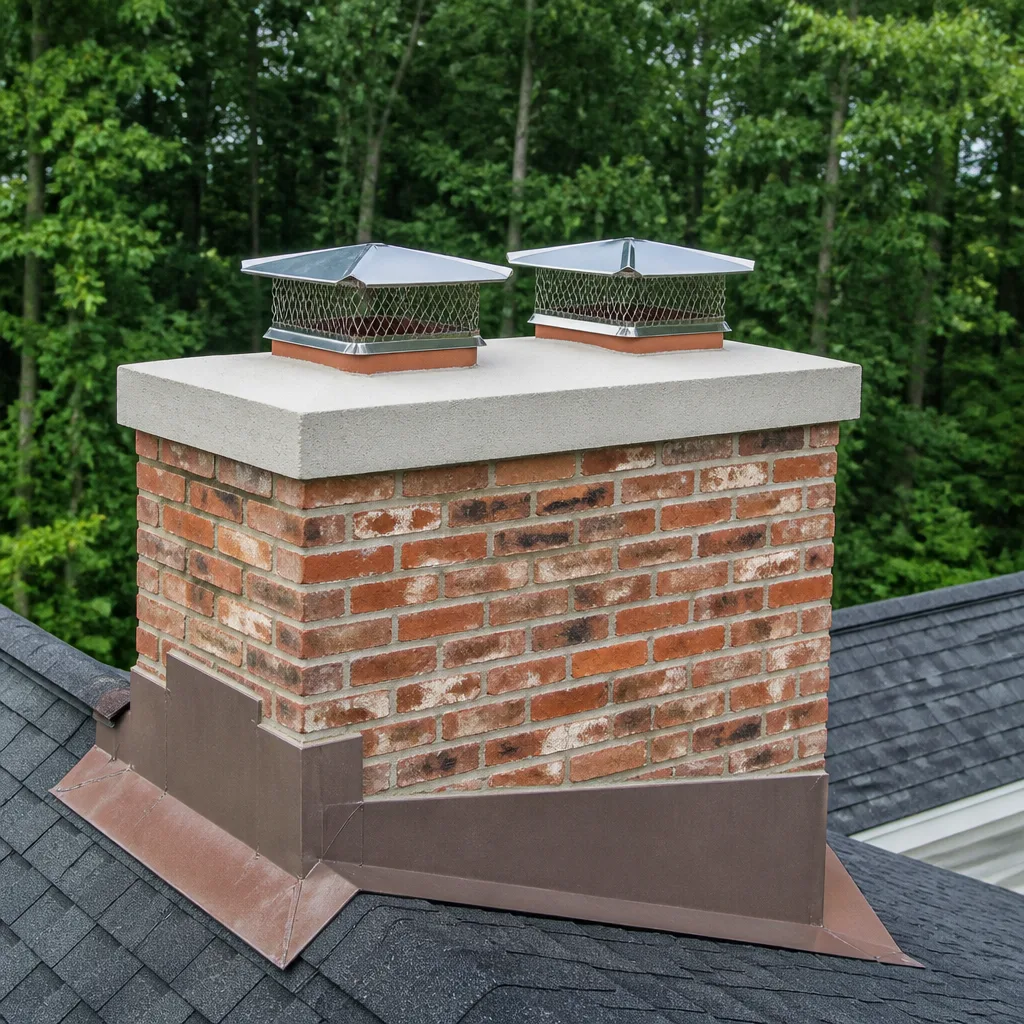
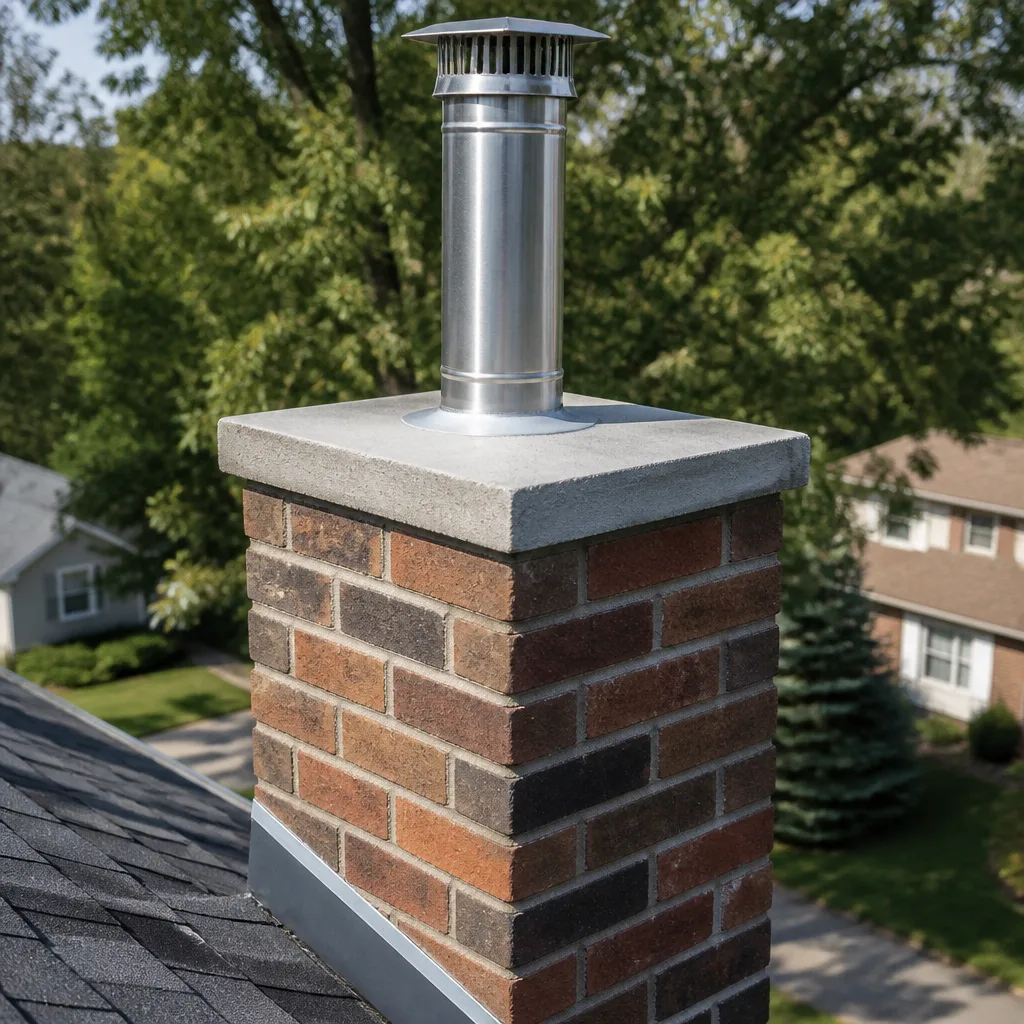
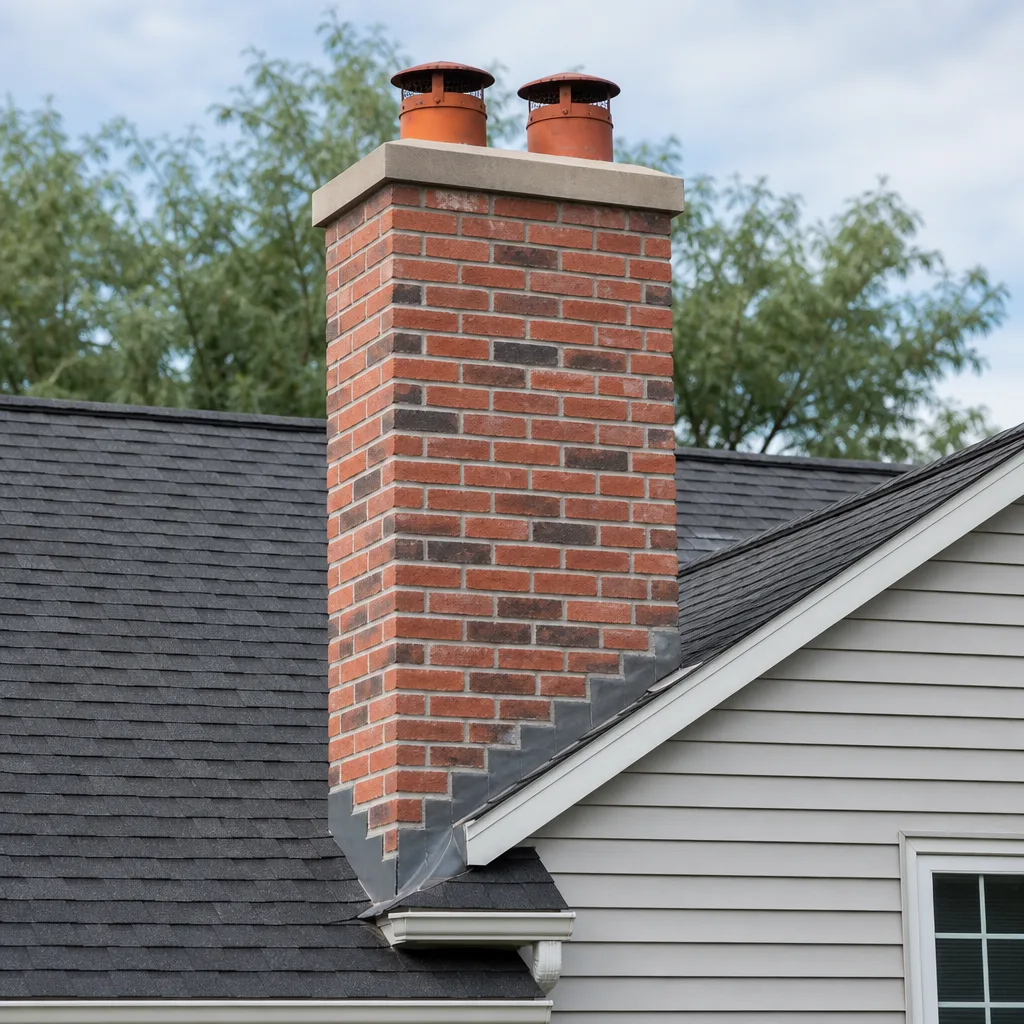
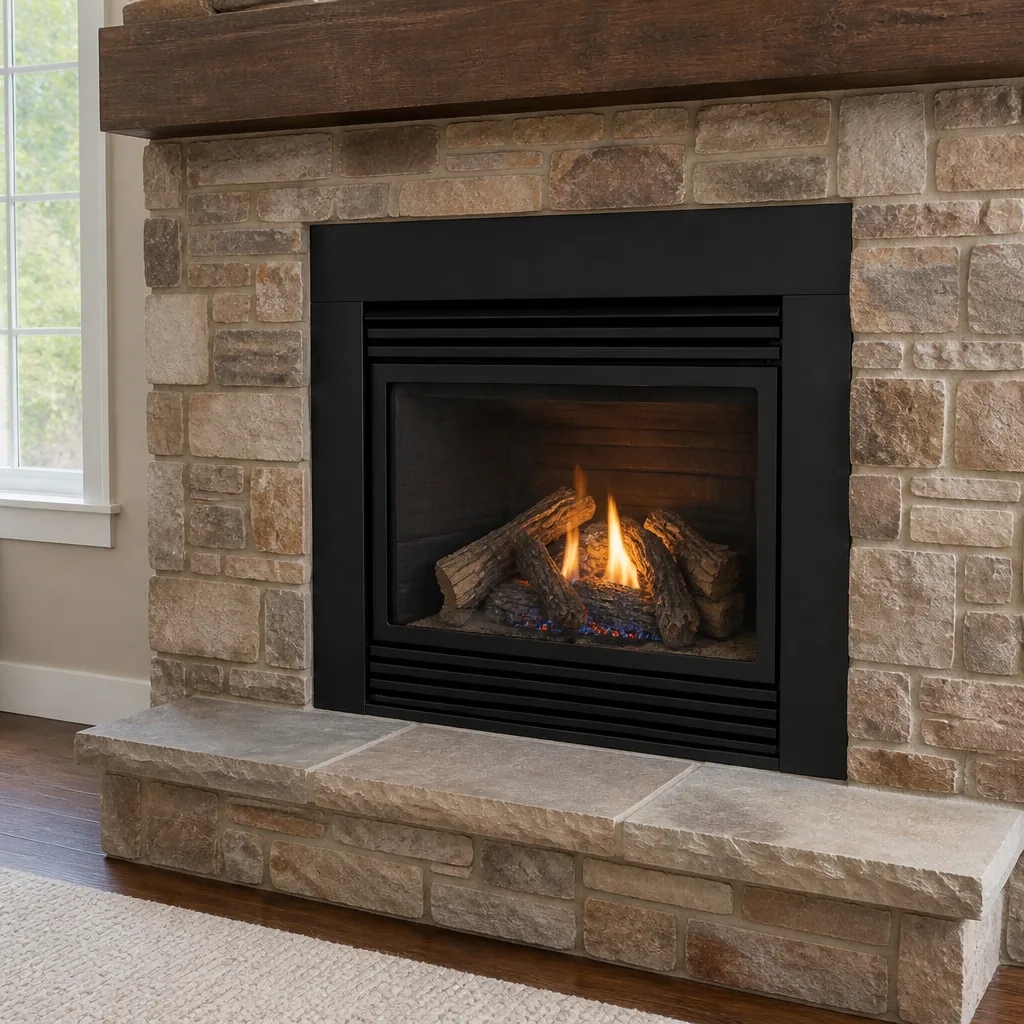
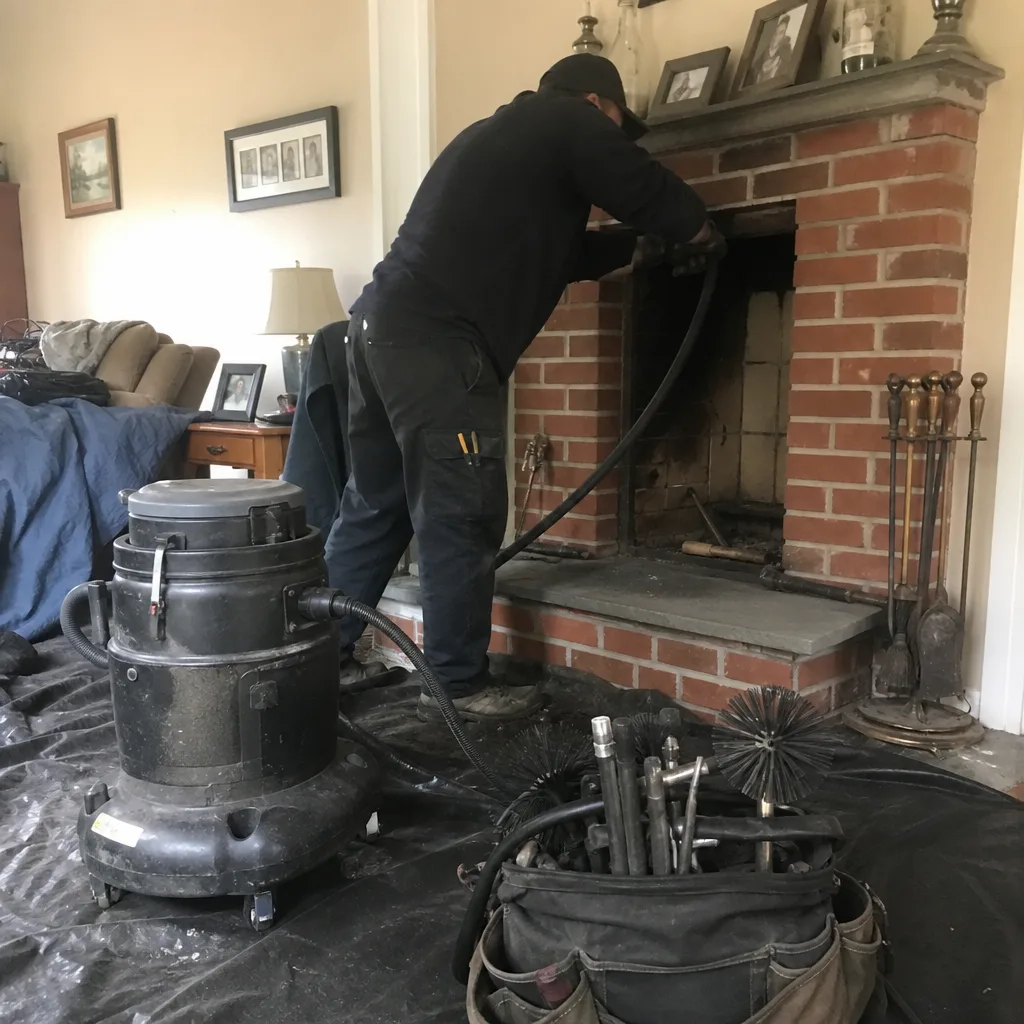 Before
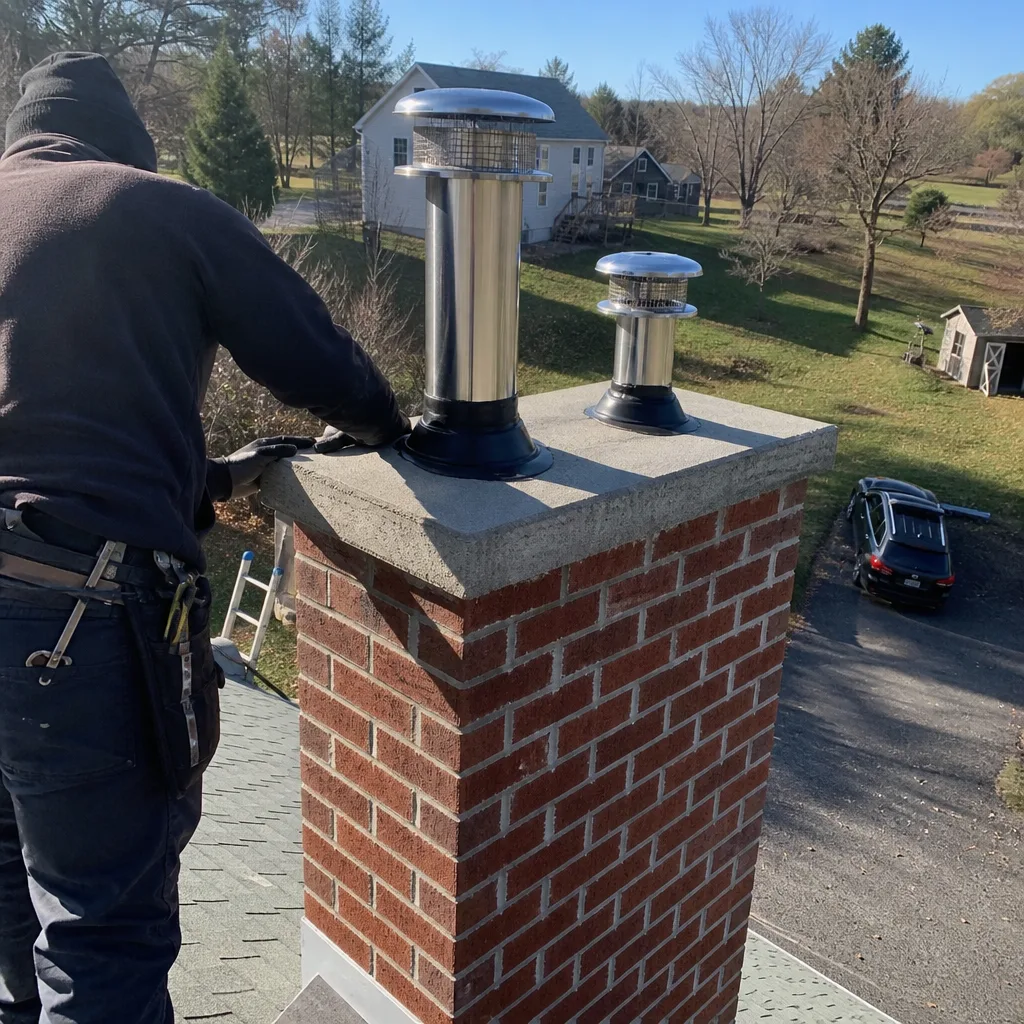 After
After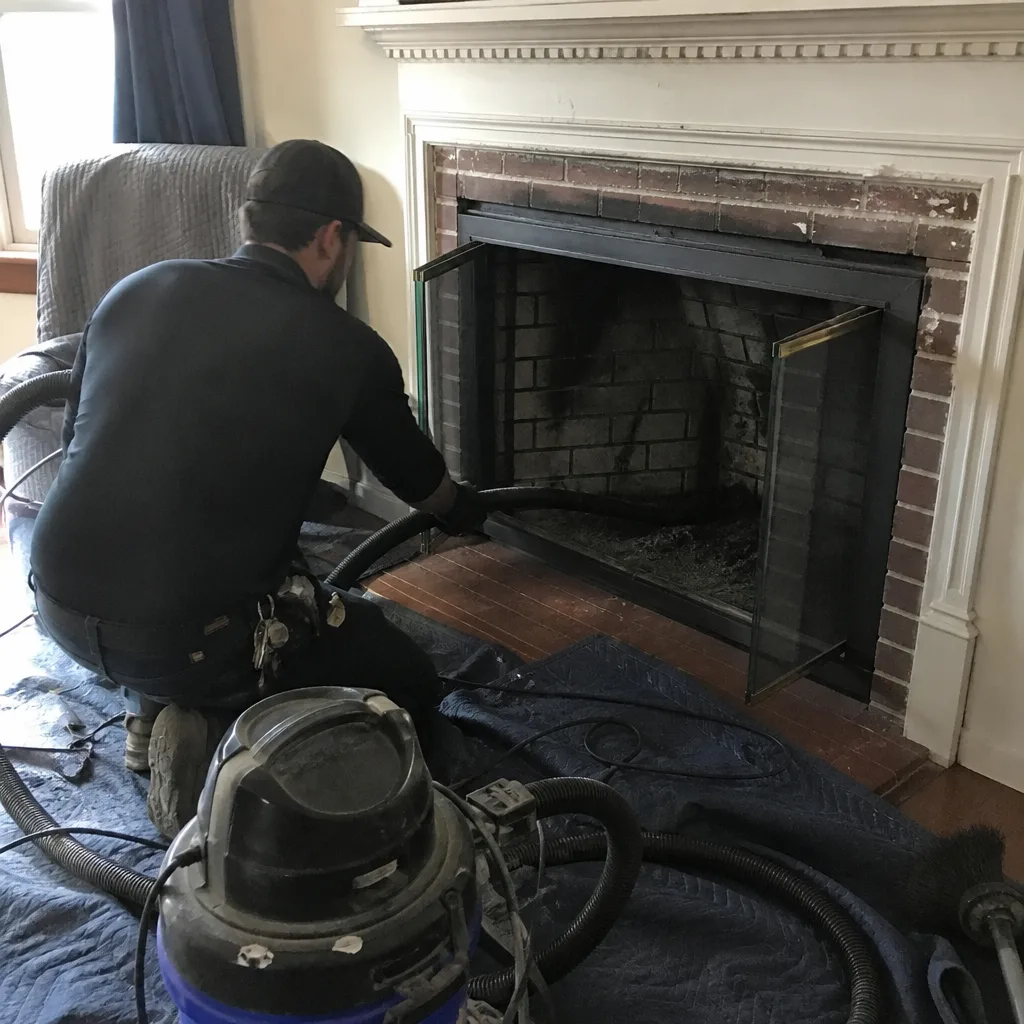 Before
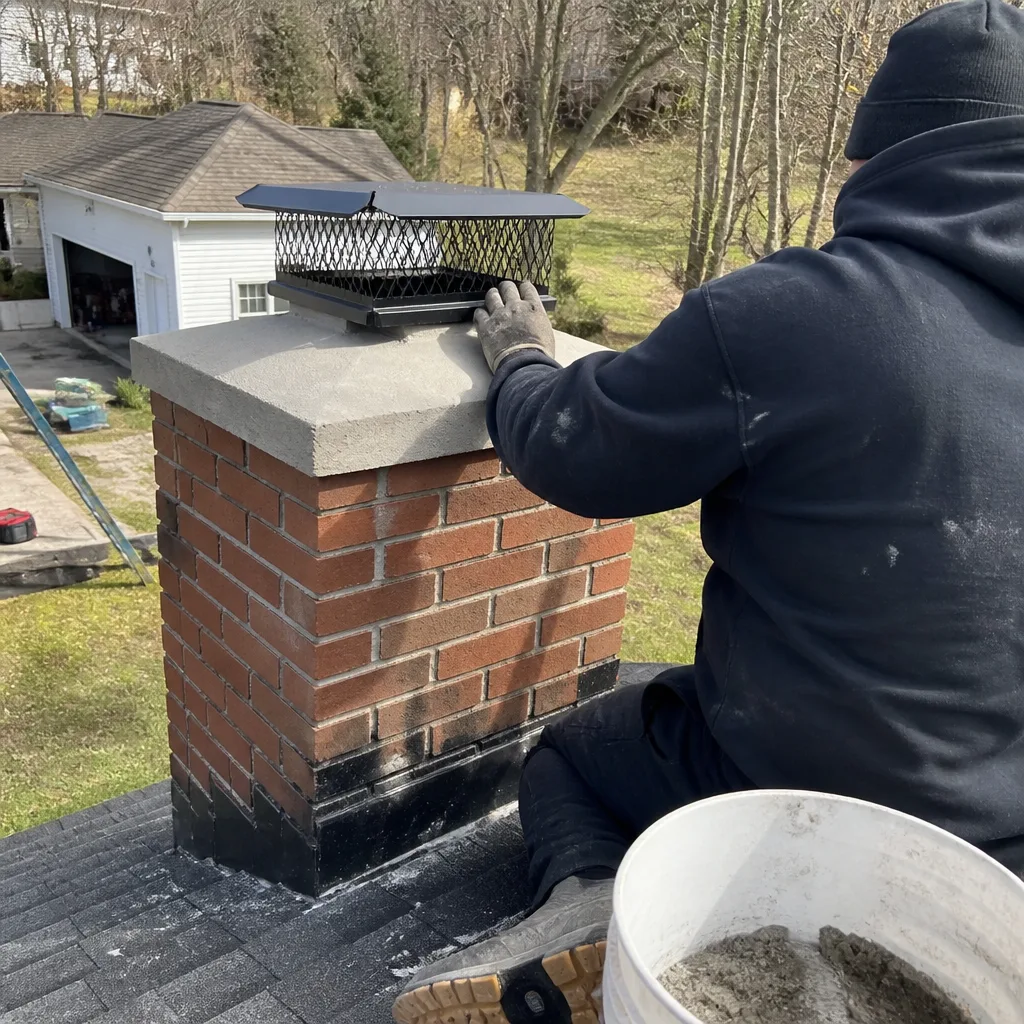 After
After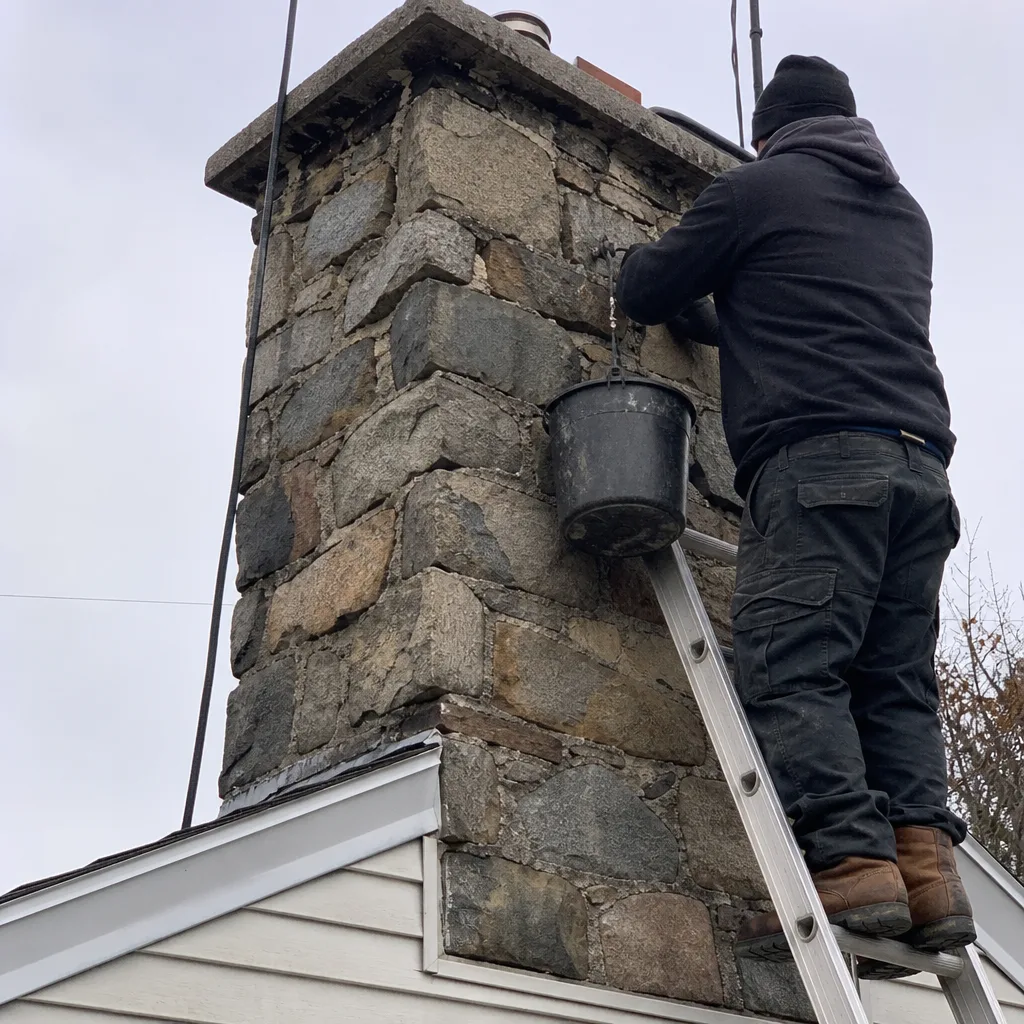 Before
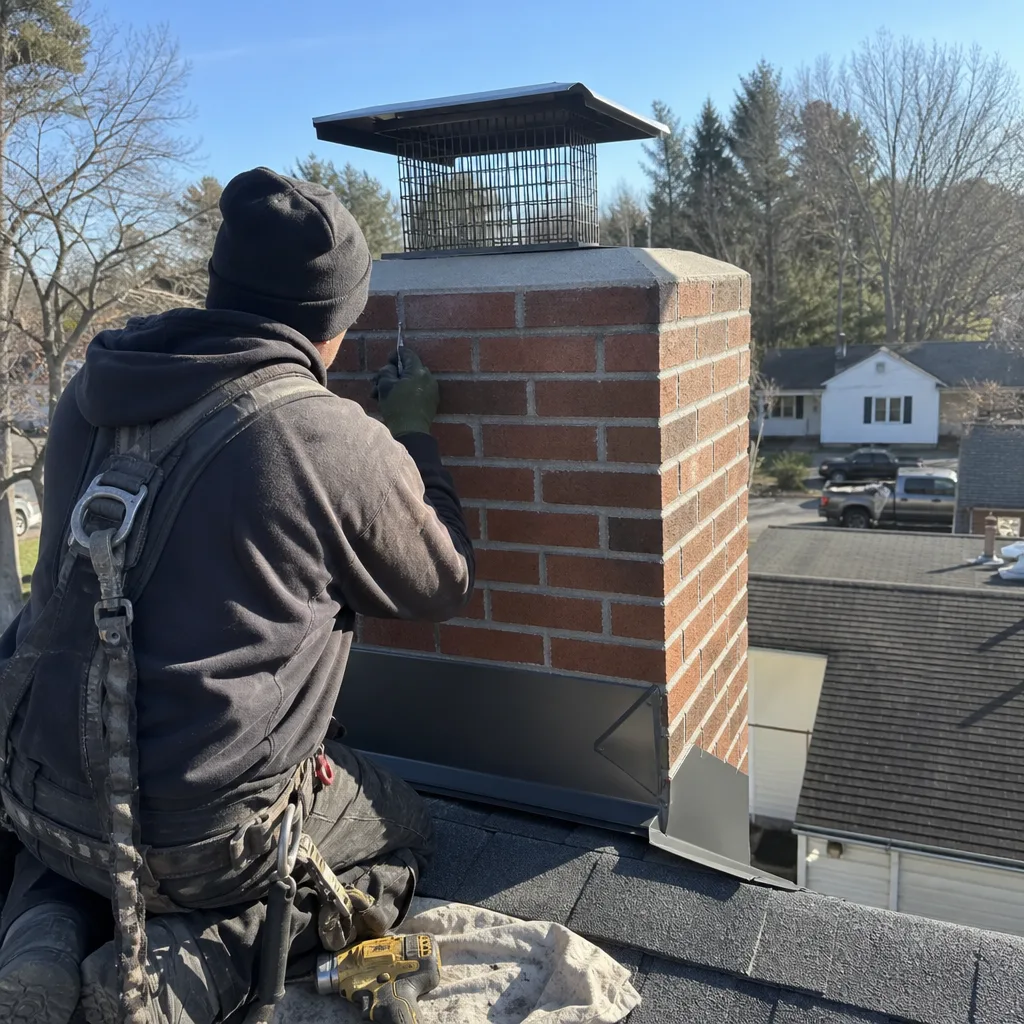 After
AfterDIY vs Professional Chimney Cleaning: The Torrington Homeowner’s Decision Guide
Here’s a number most Torrington homeowners never hear: a chimney fire burns at roughly 2,000°F, and the flue tile in your chimney is rated to crack at about half that. The fire you’re trying to prevent doesn’t announce itself. It happens in the first five minutes of a burn, when a hot ember hits a creosote deposit that’s been building since last winter. This guide will walk you through what DIY chimney cleaning actually accomplishes in Torrington, what it misses, and how to know which side of the line you’re on before you climb a ladder or pick up a phone. For more on hiring a pro, see our step-by-step guide.
Quick Answer
DIY chimney cleaning works for homeowners who burn dry hardwood in a modern EPA-certified wood stove, see light gray soot (stage-one creosote), and inspect their own chimney twice a year. Professional cleaning is the right call for anyone who sees black, tar-like glaze (stage-two or stage-three creosote), hasn’t had the liner inspected in five years or more, or wants documented proof of maintenance for insurance and resale. In Torrington, a professional sweep costs $189-$329 and includes a camera inspection most DIYers can’t replicate.
Table of Contents
- What DIY Cleaning Actually Accomplishes
- The Torrington Variables: Weather, Wood, and House Age
- Creosote Stages Explained Plainly
- The Real Cost of DIY Equipment
- What You Can’t Replicate at Home: Inspection, Liner Assessment, Documentation
- Step-by-Step: DIY Under Safe Conditions Only
- Common Mistakes to Avoid
- When to Call a Professional
- Frequently Asked Questions
- The Bottom Line
What DIY Cleaning Actually Accomplishes
A chimney cleaning rod kit with a wire brush removes loose soot and first-stage creosote from the flue walls. That’s real work, and in Torrington it’s work that matters, because even light soot restricts draft and leaves a fuel layer for the next burn. When we sweep a chimney that has only light gray powder, the brush does almost all the work. A homeowner with a basic kit from the hardware store can accomplish that same mechanical removal in 60 to 90 minutes. Your flue doesn’t care who pushes the brush, as long as the brush actually travels the full length of the flue and the soot gets shoveled out of the smoke chamber and cleanout door afterward.
But the brush doesn’t tell you anything. That’s the honest limitation. A DIY sweep removes what it touches and reports nothing back. It won’t find a cracked flue tile hidden behind a light soot coating. It won’t measure whether your flue is still the right size for the appliance it serves. It won’t spot the water stain at the top of the liner that means your chimney cap failed sometime in March. A professional chimney cleaning and sweep in Torrington includes a visual inspection, and when something looks questionable, we put a camera up the flue and show you the footage before we recommend anything.
So when we’re honest about it: DIY cleaning is a maintenance task, not an inspection. It removes fuel. It does not assess the machine. For a Torrington homeowner who has kept up with inspections and just wants to stay ahead of soot between professional visits, DIY can be a reasonable supplement. For someone who hasn’t had eyes on the liner in years, DIY creates a false sense of safety that a professional visit would correct.
The Torrington Variables: Weather, Wood, and House Age
Torrington does things to chimneys that other climates don’t, which is why seasonal chimney care matters year-round. We sit in a freeze-thaw zone where temperatures cross the freezing line dozens of times each winter. Water seeps into brick pores and mortar joints, freezes, expands, and spalls the face off brick. That’s not a dramatic claim, it’s the reason half the chimneys we repair in Torrington need tuckpointing or crown work before the flue even gets discussed. A DIY sweep won’t see spalling brick from inside. It sees soot. The two problems live in different places.
House age matters here too. A meaningful share of Torrington homes were built before 1940, and many of them still have original masonry chimneys with unlined or clay-tile-lined flues. Clay tile liners crack. They crack from chimney fires, from lightning, from decades of thermal cycling, from settling. A cracked clay liner is invisible to a brush and obvious to a camera. More on that in the liner section below.
Wood matters. Torrington sits in a hardwood belt, and oak, maple, and hickory are the common firewood. Hardwood burns hot and long, which is good, but it produces creosote at a lower volume than softwood does. The catch: hardwood fires can run cooler when the operator damps them down to stretch the burn overnight. That smoldering fire is what makes creosote in the first place. Burn hot and fast, and you produce less. Choke the air, and you’re making tar. Ask anyone on your street who has burned for a decade and they’ll tell you the same thing.
Burn frequency and appliance type change the math
- Occasional decorative fireplace user (under 12 burns per season): Your creosote stays light if you burn dry wood. DIY cleaning can handle this if you’re also inspecting regularly. A professional sweep every second season is still a good audit.
- Primary heat wood stove user (4-6 cords per season): You’re producing stage-two creosote conditions in the upper flue every year, especially with a non-catalytic stove. This is not a DIY job.
- Weekend fireplace user with a wood-burning insert: The insert’s connector pipe is where creosote hides. DIY brushes for inserts exist but they rarely seal well enough to keep soot out of the room. Professional equipment includes a sealed vacuum system that DIY kits don’t have.
Creosote Stages Explained Plainly
Creosote is distilled tar from wood smoke that condenses on flue walls. It has three recognizable stages, and the stage you’re looking at is what determines whether DIY is defensible or reckless. First-degree creosote is a brush job. Third-degree is a glaze, catch it early. The line most guides skip is what counts as stage two and why it’s the practical cutoff.
- Stage one (dust or soot): Light gray, brown, or black powder that brushes off with light effort. It feels like ash. This is what a DIY rod-and-brush setup is designed to remove.
- Stage two (flaky tar): Black flakes that look like coffee grounds or dry roofing tar. It has visible thickness and texture. You can chip it with a fingernail. A wire brush removes some of it, but it requires real pressure and the flakes are sticky enough to clog a homeowner-grade brush. This is the cutoff point.
- Stage three (glaze): Hard, shiny, black coating that looks and feels like glass. It resists a wire brush and usually requires chemical treatment plus rotary tools with chains or specialized heads. No homeowner should attempt this, full stop.
Why stage two is the cutoff: once creosote has thickness, it is fuel. A hot ember can ignite stage-two creosote. It will not ignite as easily as stage three, but it does not need to ignite easily to destroy a liner. When flue temperatures hit 1,000°F during a chimney fire, clay tiles crack, mortar joints open, and suddenly the fire has a path into the framing around the chimney chase. In Torrington, where many homes have original framing adjacent to the chimney chase from the 1920s through the 1950s, that path is wood that has been drying for eighty years.
If you open your cleanout door or look up the flue with a flashlight (from below, never from the roof on a hot fire) and see anything other than loose gray powder, call us instead of climbing up. Stage-two and stage-three creosote removal is what professional training is for.
The Real Cost of DIY Equipment
Let’s run the numbers honestly, because most DIY guides quote the price of a brush and skip everything else; for the full picture, see our Chimney Cleaning Cost Breakdown for Torrington homeowners. A basic rod-and-brush kit runs $40 to $70. That works if your flue is round, straight, and the right diameter. Most Torrington chimneys are rectangular clay-tile flues, not round stainless, which means you need a rectangular brush matched to your flue dimensions. That’s another $30 to $50 and you have to measure correctly or the brush either binds or doesn’t touch the walls.
| Item | Cost range | Notes |
|---|---|---|
| Rod set (6-8 rods) | $35-$60 | Fiberglass rods flex; nylon rods bind less |
| Brush matched to flue size/shape | $25-$55 | Rectangular brushes for clay tile flues cost more |
| Drop cloth, shop vacuum, dust mask, safety glasses | $60-$120 | Soot is abrasive and sticks to everything it touches |
| Roof ladder and roof-access safety gear | $150-$400 | You already own a ladder, but does it reach safely? |
| Time (first cleaning) | 2-4 hours | Start to finish: setup, sweep, cleanout, cleanup |
| True DIY cost, first year | $270-$635 | Plus your time |
| Professional sweep in Torrington | $189-$329 | Includes inspection, camera report, and cleanout |
After year one, DIY gets cheaper because the rods and brush are already bought. A second-year DIY cleaning might cost $20 in shop-vac filters and a Saturday morning. But here’s what the table doesn’t show: the professional sweep includes a camera inspection, a written condition report, and documentation you can file for insurance. The camera footage and a plain-English verdict, every time, no exceptions. That documentation has dollar value when you sell the house in Torrington. Buyers ask about chimney condition when there’s a wood stove or fireplace, and a folder of sweep records answers the question better than a verbal assurance.
We also hear the counter-argument often: “I’ve been doing it myself for years.” Fair. If your flue is straight, your burns are hot, and you’ve had a professional inspection recently, that’s your call. But we’ve run cameras up flues in Torrington where the homeowner had been brushing for a decade and never knew the upper third of the liner was cracked. The brush removed soot. It did not find the crack. That’s not a judgment, it’s what the camera showed, and it changed the repair from a $300 job to a $2,800 liner job because the crack had been letting heat reach the framing for years.
What You Can’t Replicate at Home: Inspection, Liner Assessment, Documentation
A chimney is a machine. Like other machines, it fails gradually, in stages, usually at the points you cannot see. The flue liner, the smoke shelf, the throat damper, the flashing where the roof meets the masonry: these are all hidden from casual observation. When we sweep professionally in Torrington, we run a camera from the firebox up through the flue cap, and the footage shows everything, including the things the brush can’t assess. That’s the gap no DIY kit fills.
Liner assessment
Clay tile liners crack, and you will not see a cracked tile behind a layer of soot with a flashlight. A crack is more than a nuisance. It’s a path for heat and creosote to reach combustible framing, and it’s why building codes and fire safety standards specify what a liner must be. Stainless steel liner systems from brands like DuraFlex and HeatShield are what we install when a clay liner has failed. When the liner has gaps but is otherwise sound, a resurfacing product like HeatShield or Gelco can restore the flue without a full rebuild. But none of that matters until someone puts a camera up there. A brush won’t tell you which one you need, and no homeowner should make that call from eyeballing a cleanout door.
Documentation
Every professional sweep generates a written report. It says what was present, what was removed, what the condition of the liner is, and what we recommend. That report goes into the buyer’s folder when you sell your Torrington home, and it’s evidence you maintained the system if an insurance adjuster ever asks. A DIY sweep generates a dirty t-shirt and a story. Stories don’t hold up in an insurance review.
What the inspection actually inspects
- Flue liner condition: Cracks, missing tile sections, gaps at mortar joints, delamination in metal liners.
- Smoke chamber and smoke shelf: Debris accumulation that restricts draft and becomes a secondary fire risk.
- Chimney cap and crown: Rust, missing rain caps, cracked crowns, damaged spark arrestors.
- Flashing and chase top: Water entry points where the chimney meets the roof or where the chase top sits on a factory-built chimney.
- Draft performance: Whether the chimney draws correctly given the appliance, the flue size, and the house pressure conditions in Torrington’s older, tighter-home stock.
That’s the professional standard. When someone tells you a chimney cleaning is just pushing a brush, that’s true in the same narrow way that changing your oil is just draining a pan. Either one can be done at home, but you’d want a mechanic looking at the car at least occasionally. Same logic here.
Step-by-Step: DIY Under Safe Conditions Only
We’ll say this plainly: if your conditions meet all of the following criteria, a careful homeowner can clean their own chimney without doing harm. The criteria are specific for a reason.
- Confirm stage-one creosote only. Open the cleanout door, shine a flashlight up the flue from below, and look for loose gray or brown powder. If it flakes, chips, or shines, stop and call a professional.
- Confirm a straight flue run. Look up from the firebox with a flashlight. If you can’t see daylight (or a clear straight shot to the top), the flue has offsets, and DIY brushes will bind or miss sections.
- Burn dry hardwood only. If you’ve burned pine, construction scrap, or unseasoned wood in the past year, creosote stage is likely worse than it looks.
- Have a recent professional inspection on record. Within the last three years. This is the non-negotiable one, because a cracked liner makes even a gentle sweeping a hazard.
- Work from below if at all possible. Bottom-up cleaning kits exist and keep you off the roof. If you must work from the roof, use a harness and a spotter on the ground. A fall from a second-story Torrington roof is a hospital event.
- Seal the fireplace opening with a drop cloth and tape before brushing. Soot is fine enough to float through your house for weeks after a messy job.
- Vacuum the smoke shelf and cleanout compartment when finished. Leftover creosote at the bottom is still fuel.
Safety note: climbing onto a roof with a brush, rods, and a dust mask is not a no-harm proposition. Roof falls are one of the most common home-injury causes in Torrington, and they spike in the fall when homeowners are trying to get ready for burning season. If your roof pitch is steeper than 6/12, or if there’s any snow, frost, or wet leaf cover, stay off it. Call us at (860) 744-2656 and let someone with the right ladder, harness, and equipment do it safely. This is not a place to save $200.
Common Mistakes to Avoid
- Brushing a chimney with stage-two or stage-three creosote. This packs the tar into the flue walls instead of removing it, and it can create a dense, uneven layer that’s harder and more dangerous than what you started with.
- Skipping the inspection and calling it maintenance. A clean chimney with a cracked liner is still a fire risk. The brush removed the symptom, not the disease.
- Using the wrong brush size. Too small and it misses most of the flue. Too large and it binds, jams, and sometimes gets abandoned mid-flue, which turns a $40 job into a $300 extraction.
- Working on the roof without a harness or spotter. In Torrington, the typical roof is a 8/12 or steeper pitch on a two-story colonial, and that’s a 20-foot fall onto frozen ground in November. It changes a project into a 911 call.
- Vacuuming creosote with a household vacuum. Creosote is acidic and abrasive. It destroys vacuum motors and blows particles through the exhaust filter unless the vacuum is HEPA-rated. It also leaves a smell in the machine you’ll never fully get out.
- Delaying because the chimney “seems fine.” Once a year, burn or no burn. Chimneys break in the off-season too. A dormant fireplace hides problems from no one’s view but yours, and most chimney failures we see in Torrington had months of warning signs that were never looked at.
- Using chemical creosote removal logs instead of actual cleaning. These products soften stage-three creosote, making professional removal easier. They do not remove creosote. They do not sweep a chimney. They are not a substitute for a brush or a professional.
When to Call a Professional
Call a professional if you see stage-two creosote, if you haven’t had a camera inspection in three years or more, if you’re buying or selling a home with a fireplace or wood stove, if the chimney has been dormant for multiple seasons, if there’s any water staining around the hearth or ceiling near the chimney, or if you simply don’t want to climb a ladder in October. Top Hat Chimney offers free estimates in Torrington, and the phone number is (860) 744-2656. We’ll come out, look at the chimney, run the camera, and tell you what’s what. If it doesn’t need cleaning, we’ll say so, and there’s no trip charge inside the county.
Frequently Asked Questions
A professional chimney sweep in Torrington costs $189 to $329 for a standard fireplace or wood stove cleaning, which includes the full-length brush sweep, smoke chamber cleanout, camera inspection, and a written condition report. Chimney repair in Torrington is priced separately and quoted before work begins, never after. You’ll have the number in writing before a tool comes off the truck.
Once a year, burn or no burn. Torrington’s freeze-thaw winter cycles cause accelerated masonry wear, and an annual sweep catches both creosote buildup and water damage before either becomes expensive. Homes that burn more than two cords of wood per season should be checked mid-season as well.
You can, if you burn only dry hardwood, see loose gray powder (stage-one creosote) when you inspect, have a straight flue, and have a professional camera inspection on record from within the past three years. If any of those conditions fail, DIY cleaning is the wrong call, and we’ll say so outright.
A sweep removes creosote and soot. An inspection assesses the condition of the liner, smoke chamber, cap, crown, flashing, and draft. Every professional chimney cleaning at Top Hat Chimney includes a camera inspection as part of the sweep, because cleaning without looking at what remains is half a job.
Only if the camera shows a crack that breaches the flue’s integrity. We don’t recommend liner work from a verbal description or a guess. The rule at Top Hat Chimney: nothing is recommended without camera evidence you can see for yourself, and we’ll tell you plainly when work can safely wait. We install stainless liners from DuraFlex and HeatShield when a liner has failed, and we resurface salvageable flues with HeatShield or Gelco.
Creosote accumulates in layers, with stage-three glaze forming where heat is highest and draft is slowest. The result is reduced draft, more smoke rollout into the room, and a higher-risk fire condition at the top of the flue. In Torrington’s older housing stock, a chimney fire can then damage the liner and expose framing to direct heat. The repair cost after a fire runs into the thousands; the sweep costs under $330.
The Bottom Line
DIY chimney cleaning has its place. It’s legitimate for a homeowner who burns dry hardwood, sees only loose soot, has a straight flue, and keeps current on professional inspections. What it can’t do is assess the liner, document the condition, or safely remove stage-two and stage-three creosote. In Torrington, where the housing stock is older, the freeze-thaw cycle is hard on masonry, and the burning season runs long, the professional route is the safer default for most homes. We’ve been cleaning chimneys in this town since 1999, and the work we do comes with a 90-Day Done Right Promise in writing. If it’s not right, one call brings us back. Call (860) 744-2656 for a free estimate, or visit our Top Hat Chimney home page or fireplace services in Torrington page to see what we do. You’ll get an honest answer, even if that answer is “it doesn’t need cleaning yet.”
Written by Wendell Pike, Owner at Top Hat Chimney, serving Torrington since 1999.